High-speed search and full analytics for Lustre FS
Millions of inodes processed per second
A high-performance Lustre search and analytics utility for demanding HPC environments. Scalable, flexible, and ready for reporting, automation, and modern AI-assisted data workflows.
Product Goal
Detective Tool provides a comprehensive analytical view of data across your file system and acts as one of the fastest search engines for Lustre.
It helps identify abnormal behavior patterns, performance bottlenecks, and anomalies at early stages, enabling rapid response, preventing failures, and avoiding cluster downtime and financial losses.
Enable fast and convenient file and directory search for administrators on the server. Implement the same capability for end users on the client side in Q3 2026.
"Respond to issues before they turn into incidents."
Details
Detective is a full-featured utility for extremely fast file search and analytics collection in the Lustre file system on MDT and OST. It processes millions of inodes per second and scales to clusters of any size. Over 45 filters are supported (FID, UID, Project ID, size, OST, mtime, and others), enabling flexible and precise searches.
Performance
Millions of inodes per second.
Reports
Customized task reports.
Scalability
No cluster size limits.
Export
Modern integration formats.
Flexible Search
50+ Lustre filters.
AI / LLM-ready
JSON output for agents.
Analytics
Full FS visibility.
Automation
Scheduled execution.
A complete list of capabilities can be provided upon request
Analytics
Detective performs deep analytics of the Lustre file system, using object size as the key metric. The tool builds analytics based on object sizes across files, users, groups, projects, and links; by time attributes, placement parameters, compression information and compression ratio, as well as the directory tree - up to a specified depth.
The analytics is complemented by ranking views of users, groups, projects, jobsID and directories by file count and total data size, enabling fast identification of primary sources of storage growth and filesystem load.
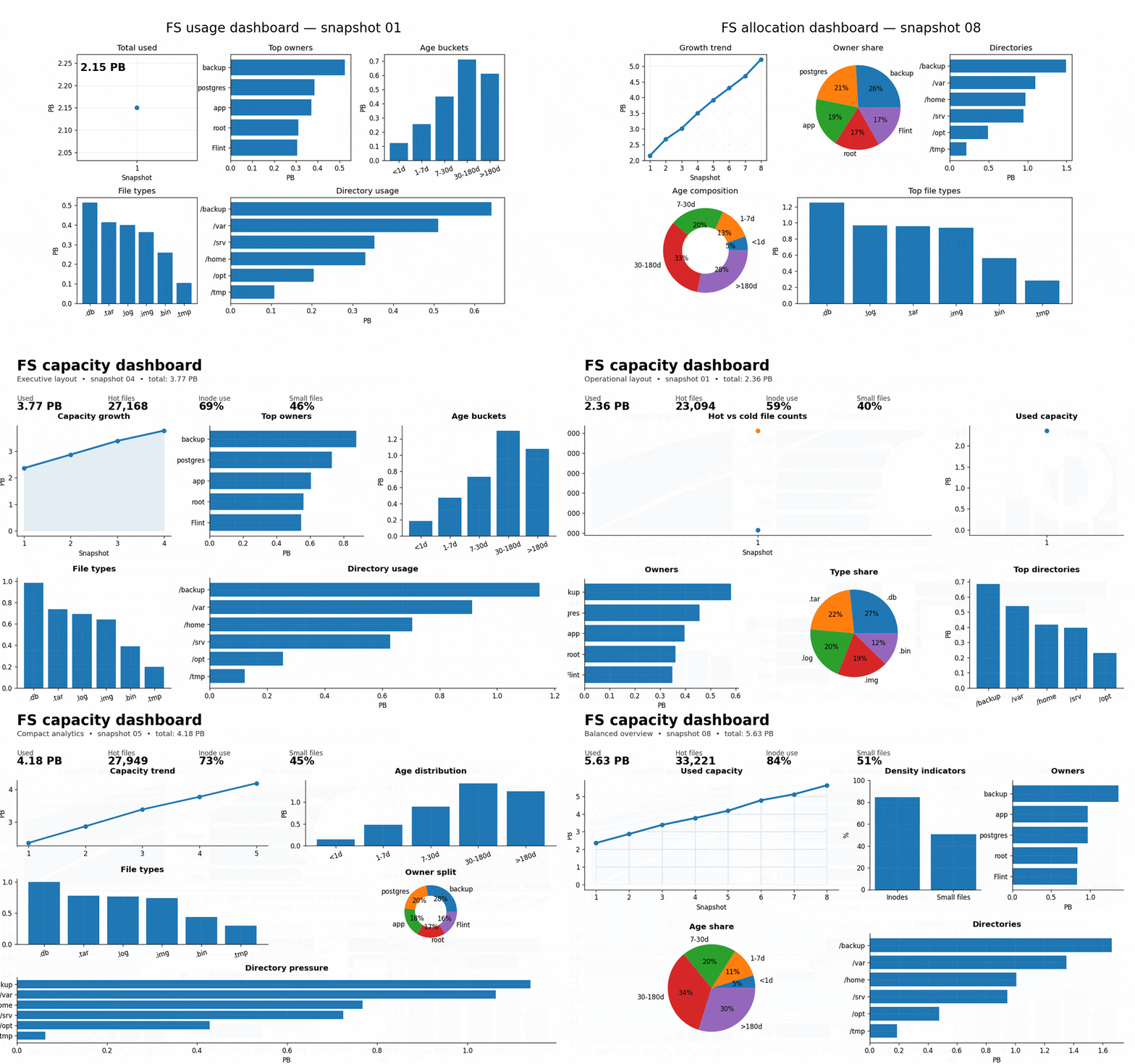
Analytical reports can be output in a human-readable console format, written to JSON and Parquet files, or exported to a dedicated database for further analytics.
Reports
Detective provides a dedicated reporting layer based on aggregated analytics data stored in the database. Reports are built on summarized metrics, not on per-file records, and focus on changes over defined time ranges – such as days, weeks, or months – capturing filesystem activity and evolution over the selected period.
Because reports rely on global, aggregated analytics rather than individual file data, they require negligible storage space while still providing clear visibility into growth dynamics, usage patterns, and structural changes across the Lustre filesystem.
AI / LLM
If AI systems are used in your production environment, Detective can generate output for both analytics and search results in JSON, which is the optimized output format for AI agents.
By producing compact, structured, and AI-optimized reports, Detective helps minimize processing overhead and significantly reduce AI-related costs while preserving essential context.
Automation and scheduled execution
Detective provides a flexible automation layer built around two complementary mechanisms.
Event-Driven
Detective can trigger external actions based on search or analysis results. When a condition is met, the tool can execute an external command – for example, automatically removing matched files or invoking custom workflows via external scripts or commands.
Scheduled Tasks
Detective supports fully automated execution on a schedule. Scans and data collection tasks can be run periodically – daily, weekly, monthly, or at custom intervals – enabling continuous analytics and reporting without manual intervention.
Together, these capabilities allow Detective to operate as part of an automated infrastructure workflow, not just as an on-demand analysis tool.
Security and open information
Security by Design
At HPC-scanners, security is a core requirement for all our products. Detective is designed for safe operation in production HPC environments and does not cause cluster instability or outages. The tool operates in strict read-only mode and never modifies any objects on MDT or OST devices.
Controlled Resource Usage
To avoid resource contention and starvation, Detective includes an internal resource controller that carefully manages CPU, memory, and I/O usage, ensuring predictable behavior alongside production workloads.
Transparent Core
We also recognize the importance of transparency for security validation. For this reason, we provide limited access to the scanning engine source code under the "Detective – Community Edition License". This allows users to review and verify the safety of the core scanning logic. GitHub open_in_new
Business Benefits
Faster data search and analysis
Greater visibility into file system usage
Lower storage and infrastructure maintenance costs
More accurate budgeting and cost forecasting
Reduced risk of incidents
More efficient use of storage resources
Better management of hot and cold data
Less manual routine work
License benefits
Regular Updates
New Features Every Quarter
Full Access to Capabilities
All Features Without Limitations
Support for Current Versions (LTS)
Stability and Support with an Active License
Flexible Licensing Terms
For Various Scales and Scenarios
Fast Critical Fixes
Fixes in the Shortest Time
Security and Change Control
All Updates Undergo Internal Validation
Expert Support
Direct Work with Engineers
Support for Legacy Versions
Adaptation to Current Cluster Capabilities
Custom Functionality
You Propose Ideas — We Implement Them
Branding (OEM)
Available with an OEM License
“Control today - stability and savings tomorrow.”